


TRAINING IN ETIQUETTE AND LEARNING JAPANESE IN THUAN AN, KYOTO
From ancient times to the present day, etiquette and manners have always been what our ancestors wanted their descendants to possess, constantly cultivating them to treat others with the utmost respect. Parents always advised us that before learning cultural knowledge, we should cultivate etiquette and manners. Every time we enter a school, we often see the inscription “First learn etiquette, then learn knowledge.” So what does this proverb mean in our lives?

“First learn manners, then learn knowledge” is a proverb consisting of two parallel parts that complement each other in meaning. The first part is “First learn manners.” “First” means the beginning, the foremost. “Manners” refers to etiquette, politeness, or how one interacts with others and situations around them. It means that one must first learn and cultivate manners and proper conduct towards others, ensuring it is appropriate, pleasing, and in accordance with the customs and traditions of society.
The second part is “Then learn knowledge.” “After” means later, and “knowledge” refers to cultural subjects and the knowledge we acquire from society. Therefore, this part suggests that after learning manners, one should begin to learn cultural knowledge, cultivating and refining one’s understanding once one has learned how to interact with others.
Therefore, the meaning of the entire saying is to advise us to learn how to behave and interact with others first before discussing the acquisition of cultural knowledge.
That’s why at THUAN AN KYOTO, from the beginning of our Japanese language studies until our departure, teachers constantly train and refine our students’ manners before each lesson. The hope is that after arriving in Japan, they will be more well-liked by their colleagues and have smoother and more successful careers.
As students of THUAN AN KYOTO, we all know the essentials for greeting: greet loudly and clearly, bow correctly according to Japanese etiquette, and most importantly, smile.
Related articles
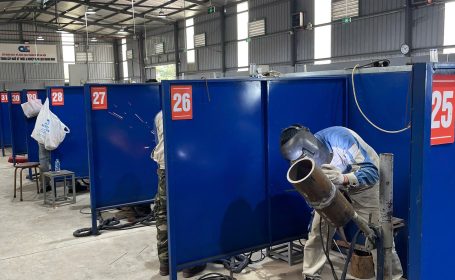
Preparing Workforce For Europe Market
Europe is currently facing a workforce crisis that is affecting multiple industries. Labor shortages in food processing, construction, and metalwork are becoming increasingly severe. Vietnam manpower is emerging as a key solution to address this issue. The primary cause of this shortage is demographic change. With an aging population and fewer young workers entering the…
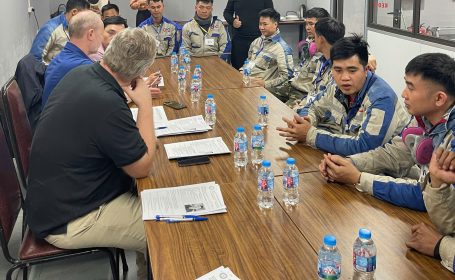
Seamar Company Visits TAK Manpower to Recruit Skilled Welders for Denmark Project
On January 29, 2026, TAK Manpower was honored to welcome Seamar for an official recruitment visit at our headquarters in Vietnam. This important event marks another milestone in international cooperation, reinforcing TAK Manpower’s role as a trusted provider of skilled Vietnamese workers for the European labor market. During the visit, Seamar conducted direct interviews and…

The process for going to work in Japan consists of 8 steps.
When participating in the Japanese labor export program, we need to follow the basic steps in the 8-step process below. Step 1: Candidate Preliminary Selection The candidate preliminary selection process will help choose candidates who meet the eligibility requirements for working in Japan. Step 2: Health Examination Once all initial selection requirements are met, workers…
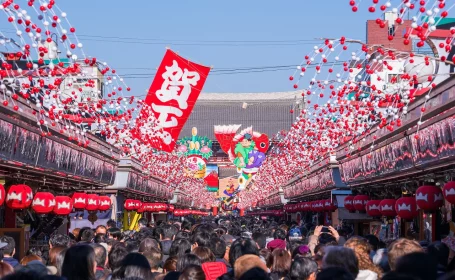
Experience the traditional New Year in Japan.
Vietnam and Japan have long established diplomatic relations, with cooperation and exchanges expanding across politics, economics, science and technology, and culture. Vibrant cultural exchanges between the two countries have contributed to promoting artistic cooperation, providing opportunities to better understand each other’s cultures and societies, and strengthening ties between the younger generations. Therefore, the “Oshougatsu Traditional…

GUIDE TO VIEWING YOUR SALARY WHEN WORKING IN JAPAN
A basic salary statement usually includes the following four items: 1. “勤怠” (kintai): Detailed information about the number of working days and hours… 2. “支払” (shiharai) or “支給” (shikyū): Amounts paid by the company 3. “控除” (kojo): Deductions 4. “差引支給額” (sashihikiki kyūgaku): Net salary after deductions Details of each item are as follows: 1.勤怠 (kintai):…

Goals for the future of youth – Flight crew, December 3, 2022
Youth is fleeting, and the world is vast. So instead of sitting still and waiting for opportunities, you need to act, fly far to see everything and pursue your goals. All your efforts will be rewarded. Congratulations to the group of 15 students who departed on the evening of December 3rd and have safely arrived…